

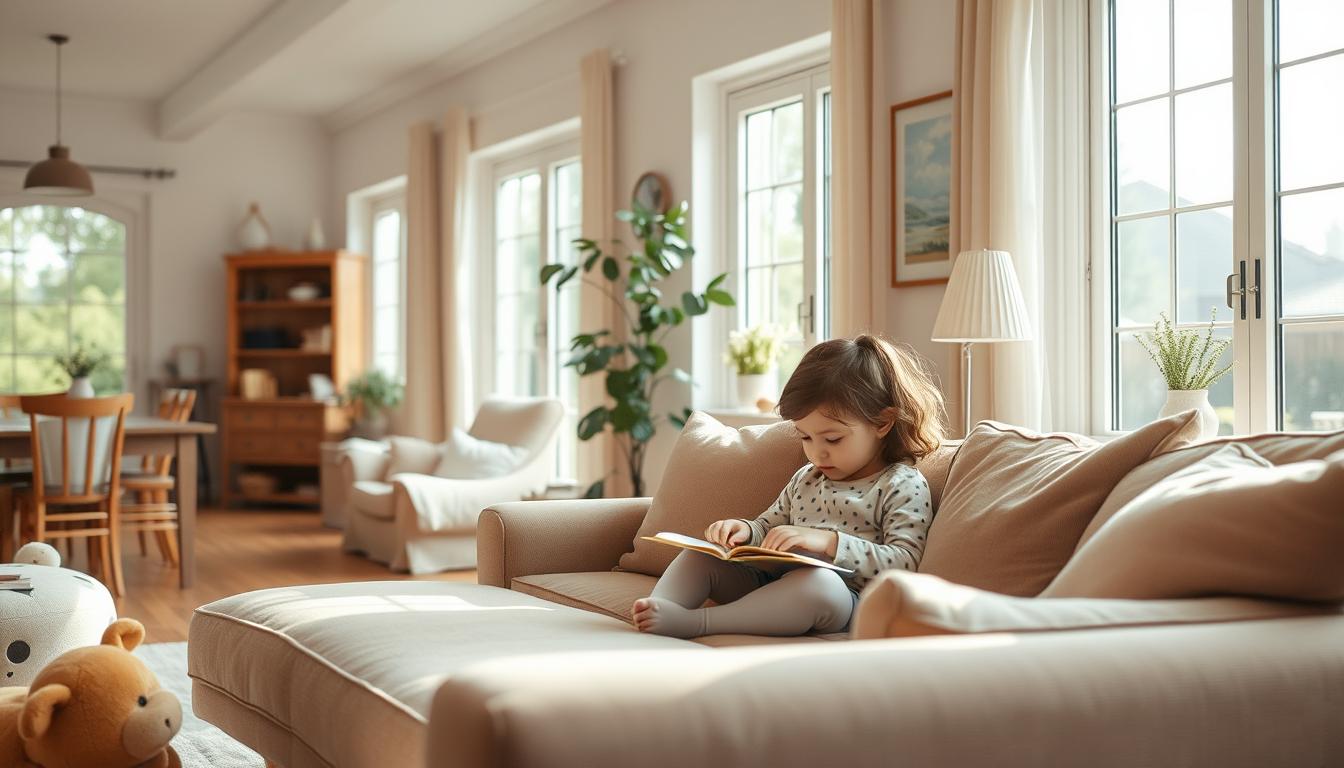
Stability comes from knowing where we are and who we are today. Brother Pháp Dung says saying “I have arrived, I am home” helps us care for ourselves now. The pandemic and global conflicts like the Ukraine war make many feel unsafe.
Feeling safe again means noticing the small things, like clean water or a safe bed. These details help us find stability.
In the U.S., over 35 million kids face trauma. In South Carolina, 62% of adults have faced childhood adversity. But mindfulness can change how we react to challenges.
Stability is not a fixed point but something we can navigate. Focusing on the present can turn chaos into calm.
Adults who felt safe as kids are healthier. Presence helps us accept change without fear. By caring for ourselves and our community, home becomes a place of safety and growth.
This journey begins by being present in the moment.
Understanding the Feeling of Safety at Home
Emotional safety at home is more than just locks. It’s feeling calm without fear of chaos. Many adults grew up in unstable homes, where calm was strange.
A 2018 study in Sweden found three key things for home safety. Feeling at home, controlling care choices, and trusting caregivers are essential. Participants said knowing staff well and having them stay helped a lot.
Feeling safe lowers stress hormones. It makes our heartbeats and muscles relax. Without it, our brain acts like we’re in danger, even when we’re not.
Creating a safe haven starts with small steps. Naming your needs, setting boundaries, or using techniques like smelling fresh air helps. Emotional safety is about feeling safe to be vulnerable, not punished. Your home should be a place where you feel calm, not stressed.
The Person Who Made Home Feel Safe Again
Imagine walking into a room where your breath eases because someone’s presence alone feels like a shelter. This is the impact of the person who made home feel safe again. They aren’t superheroes—they’re guides who model consistency and calm. They turn chaotic spaces into havens.
For families like the Joneses, open communication replaced the Smiths’ patterns of criticism. This shows that safety thrives where trust grows.

Therapists and loved ones who rebuild trust at home often share traits. They listen without judgment, stay grounded in crises, and acknowledge past wounds without dismissal. Judith Lewis Herman’s trauma healing phases—starting with safety—show how these allies help survivors name their needs.
For instance, mindfulness practices or DBT skills taught by professionals become tools to steady moments of instability.
Healing from instability isn’t linear. It’s learning to say, “This pain doesn’t define my future.” When Heather became my accountability partner, her daily check-ins reminded me safety could be co-created, not just found. Small acts—like writing three daily gratitude entries—become anchors in rebuilding trust at home.
Every step, whether ending toxic ties or embracing community support, is part of reclaiming peace.
Key Elements That Create a Safe Home Environment
Creating a safe home starts with the basics. This includes good lighting, strong stair rails, and secure locks. Simple actions like securing rugs and checking smoke detectors make homes safer. Brother Pháp Dung says, “The faucet that turns on and water flows out is a privilege.” Focus on these everyday things to make your home a safe place.
“If we have a safe place, a blanket, and a bed to sleep on, are we present for these things?”
To prevent accidents, take action. Install grab bars in bathrooms and test carbon monoxide detectors every month. Set your water heater to 120°F. Clear hallways of clutter to avoid falls—30% of falls in older adults happen because of tripping hazards.
Store medications in locked cabinets and keep cleaning supplies in their original containers. This helps avoid accidental poisoning.
Psychological safety is also key. Talking openly with your family can make them 30% happier. Listening well can cut down misunderstandings by 45%. A home is safest when it feels emotionally secure, too.
Make your home a safe haven by taking practical steps and being empathetic. Teach kids how to escape in case of fire and install nonskid mats. Display emergency numbers where everyone can see them. A home that values both physical and emotional safety is a place where everyone feels safe and connected.
Building Trust with Loved Ones
Building trust starts with self-love. “When we begin to love ourselves and put in the work to get to know ourselves, we begin to recover and heal,” experts note. Rebuilding trust at home requires effort. Open communication helps avoid misunderstandings—studies show 70% of couples feel better when they feel heard.
Start small by apologizing sincerely, keeping promises, and admitting mistakes without being defensive. Broken trust often comes from unmet needs, like 52% citing broken promises or 47% feeling neglected in crises. To rebuild safety, set clear boundaries calmly, using “I” statements.

Active listening—eye contact, nodding, paraphrasing—can cut conflicts by 40%. Counseling speeds up healing from instability. Couples in therapy see a 75% improvement in trust over six months.
Honesty about emotions matters—68% of partners need transparency to feel secure. Forgiveness plays a role too—75% report peace after letting go of resentment. Healing takes time, often 6 months to 2 years, but patience strengthens bonds.
Trust grows when both parties commit to change. Small acts of reliability—showing up on time, sharing feelings openly—add up. Healing from instability isn’t linear, but consistent kindness rebuilds safety. Every step forward nurtures the foundation of mutual respect and care.
The Role of Community in Safety
Building trusted community networks makes everyone feel safer. Brother Pháp Dung says, “As a community, we can work for change. We also need to be stable. Our stability is what we offer when change happens.”
Alzheimer’s Greater Los Angeles shows this with their wandering prevention programs. They train police and give out GPS devices. This turns communities into safe havens for those who need it most.
“A shared understanding of community needs builds resilience.”
Creating safe havens starts with working together. In Texas, Project Lifesaver and in Boston, the police use GPS for those with dementia or disabilities. These efforts build safety in relationships between families, police, and local groups.
United Way’s Project Re-Unite helps by giving out tracking tools and scent kits. This ensures no one is left behind during emergencies.
Community solutions also help during disasters. FEMA’s Whole Community approach shows how working together improves readiness. In Cincinnati, the GRASP program combines education, training, and technology. It brings neighbors, businesses, and schools together to make safety a team effort.
Strong communities don’t just react; they prevent problems. In Fort Bend County, families use registries and caregivers get training. This builds trust that spreads far and wide. Safety becomes a promise we all keep together.
Creating Routine and Stability
Routines give us a sense of security when things feel out of control. safety routines at home act like silent guardians, calming our minds. Studies show that regular patterns help us relax and focus on healing.
A UK study found that it takes about 66 days to form a new habit. But, it’s important to be flexible. Some people might need up to 254 days to adjust.

“Proactive acceptance creates an energetic space for new possibilities to show up.”
Children do best with structured schedules. Research shows they behave better by 30% and control their emotions by 25%. Adults also benefit from daily routines, which improve sleep and mental strength, according to The Lancet Psychiatry.
Even small habits, like 20 minutes of self-care or weekly family dinners, help us stay stable.
But, too much rigidity can be bad. Let your routines change with your life. Parents who use visual aids see a 60% improvement in their kids’ understanding. Advance warnings can also reduce anxiety by 35%.
Professionals can adopt habits like monthly reading or weekly networking. This mix of growth and consistency is key.
Being present makes routines more powerful. Mindful moments, like enjoying morning coffee or bedtime stories, turn simple actions into safety routines at home. Stability isn’t about being perfect. It’s about showing up, again and again, in ways that feel real.
Choosing Your Safe Spaces
Safe spaces start small. A corner with soft lighting or a blanket can become your anchor. Creating safe spaces begins with noticing what soothes you. Soft music, calming scents, or textured throws can turn any room into a secure living space. Even temporary setups matter.
For those in unstable homes, portable tools like journals or noise-canceling headphones can build a mindful home environment anywhere. Studies show 50% of homeless children face anxiety—yet 100% of families helped by Dwell with Dignity in 2022 found stability through tailored support. Small choices count.
Light a candle. Rearrange a shelf. These acts reclaim control. A well-placed plant or cozy chair can signal: this space is mine. These moments are your foundation. Even in shared or temporary housing, safety starts with intentional choices.
Start small. A pillow fort, a playlist, or a designated “calm corner”—these become lifelines. Safety isn’t just physical; it’s how a space makes you feel. Every detail counts.
Resources for Enhancing Home Safety
Improving home environment safety begins with the right tools and support. Books like Women Who Love Too Much by Robin Norwood help understand emotional patterns. These patterns can impact emotional safety at home.
Therapists who specialize in trauma and occupational therapists can assess home risks. Home safety consultants identify hazards like loose rugs or dimly lit stairways. Smart devices like fall detectors and medical alert systems provide modern protection.

Community programs and support groups help build trusted community building. They connect seniors with local networks. ASHA and the National Resource Center offer guides on modifications like grab bars and nonslip mats.
Free assessments through local aging services can spot risks, such as clutter or uneven flooring. Affordable options include LED motion lights for stairways and reach sticks for cabinets.
Medication management apps and delivery services help reduce confusion. Emergency response systems auto-call for help if a fall occurs. Simple steps like securing carpets and keeping walkways clear cut fall risks.
Even small changes, like adding nightlights or using nonskid mats in bathrooms, make a big difference. Remember, prioritizing safety is not just practical—it’s an act of self-care.
The Journey to Rebuilding Safety
Healing from instability takes time. It’s not always smooth. One listener said, “I’m learning to accept my own love and others’ even when old doubts resurface.” This shows that every step forward is important, even if there are setbacks.
Building safety in relationships starts with being honest. Couples like Clinton and Charity Munoz from Restored 2 More say trust grows when we work on ourselves. Their podcast teaches that empathy, not defensiveness, is key. Tools like EMDR therapy or community support can help, as seen in those who rebuilt after hurricanes.
Every small win is important. Feeling safe again, like after a panic attack or a good talk, makes us stronger. Writing down these moments helps our brain remember safety is possible. Therapists at Regeneration Ministries, with over 40 years of experience, say growth is slow but doable with effort.
Being grateful helps us see our strength. Even after losing everything, people find inner strength. Feeling safe again is about making progress, not being perfect. As Charity says, “Vulnerability builds bridges where walls once stood.” This journey is tough, but it’s worth it, one step at a time.
Final Thoughts on Safety and Protection
Creating a mindful home starts with being present. This focus helps us heal and grow. Small steps, like setting routines or seeking support, add up over time.
Feeling safe again isn’t about being perfect. It’s about showing up for yourself, even when progress is slow.
Safe homes have a positive impact on others. When we build our own resilience, we inspire courage in others. Survivors often help guide those on their own paths.
Support networks like 1800 RESPECT or Lifeline offer critical help in times of crisis. Every effort to speak out against abuse or seek help matters.
True safety is a daily choice, not a finish line. It means trusting our instincts and honoring our strength in rebuilding. By being kind to ourselves and reaching out when needed, we make our homes safer with each mindful step.