

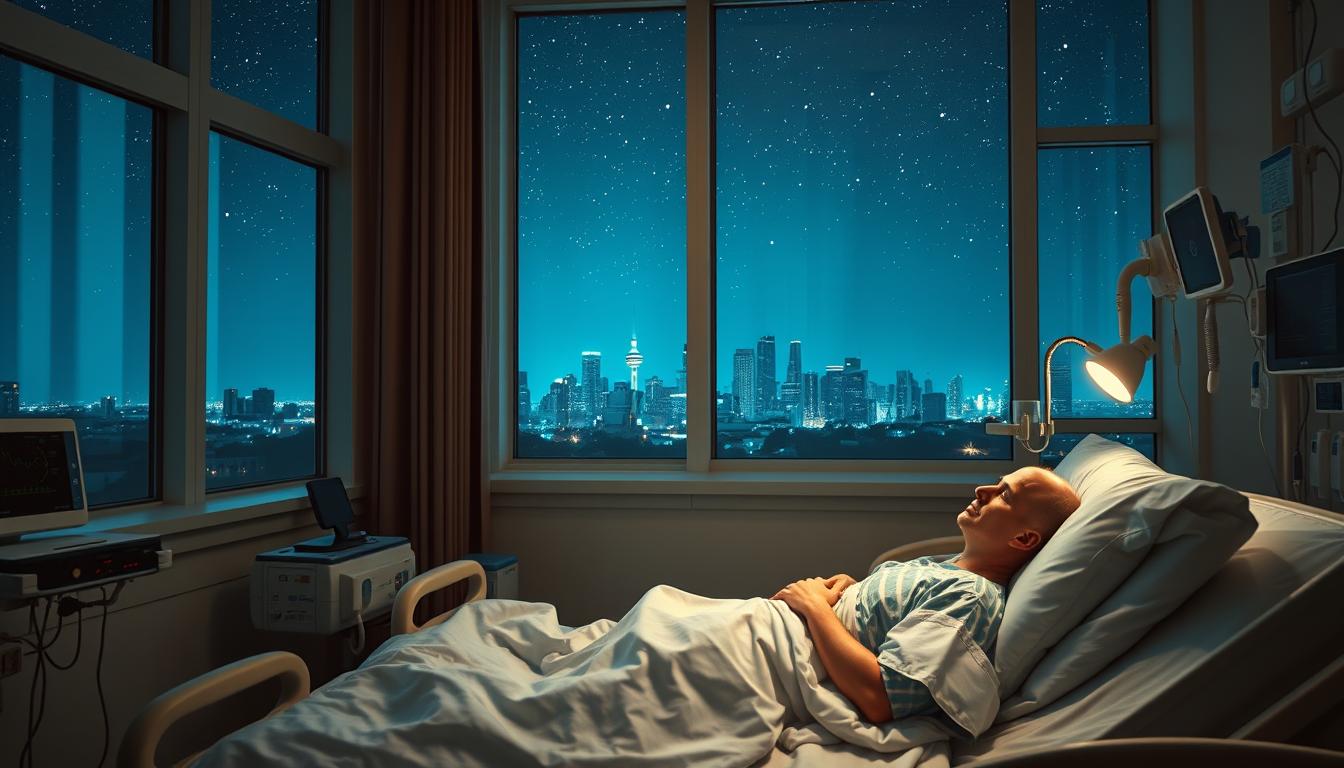
When crisis hits, it’s hard to see clearly. But my time in the hospital was different. It became a place where I learned a lot about life.
The hospital’s cold halls showed me growth is possible even in fear. Every second, from long waits to peaceful nights, taught me about being strong.
Looking back, I realized small things are big. I learned that 60% of patients feel scared before surgery. But nurses, who often feel stressed, always put patients first. This showed me the quiet bravery of people.
Stress and quiet, hope and doubt, all mix together in the hospital. But it’s in these moments that we find life’s most important lessons.
Clarity in the Face of Adversity
“The hospital walls became a mirror, reflecting what truly mattered.”
The hospital stay brought unexpected clarity. The noise of everyday life disappeared, making me focus on what’s important. Chronic conditions like POTS made me value health, family, and purpose more.
A study in theJournal of Personality and Social Psychology found that facing challenges can make us stronger. It shows that adversity can build mental resilience.
It’s not about ignoring pain; it’s about where to put our energy. I adopted a growth mindset, focusing on what I could control. Doing master’s classes and starting Aesthetic Alchemy while sick showed that crisis can spark creativity.
Adversity taught me to listen to my body and doctors. Chronic illness is not a setback but a new way to see the world. By focusing on what truly matters, I rebuilt my life. Resilience is learned, one mindful choice at a time.
The Importance of Connection
During my hospital stay, I learned how human connection in hospitals is essential. A nurse’s smile or a friend’s call made a big difference. Studies show that strong importance of relationships lowers depression risks and improves recovery. But, loneliness can slow healing.

A 47-bed cardiac unit in Auckland found that patients with a strong patient support network healed faster. Nurses said those feeling isolated stayed longer. One patient said, “Without my family’s visits, I felt lost.” Their words show that social ties are vital, not just nice.
Healthcare teams now work to build connections. They use virtual visits, group therapies, and care companions. The pandemic showed us that digital chats can fight loneliness. But, nothing beats a hand squeeze or a laugh shared.
Lessons in Patience
Hospital stays show us we can’t control time and healing. The pace of recovery is its own, teaching us patience. Waiting for test results or doctor visits is a daily lesson in patience.
Learning to accept our limits is key. Bodies heal at their own pace. Pushing too hard only leads to frustration.
Watching someone like Toby, who stayed clear-minded despite failing senses, showed us the power of slowing down. Even small steps forward are important when healing doesn’t follow a schedule.
“The program emphasized focusing on the humanity of patients, not just the medical aspects,” showing a shift from urgency to presence.
Healthcare workers live this balance every day. A medical assistant, like Helen, learned patience through constant calls. Her patience led to better patient materials, showing the value of slowing down.
These lessons aren’t just for hospitals. Life moves fast, and we can’t always control it. But learning to wait builds resilience for life’s challenges.
The Value of Healthcare Workers
During my stay, I saw the hospital staff dedication every day. Nurses balanced charts and talked with patients, showing the nursing care impact goes beyond medicine. It’s about building trust.
One aide told me her job is more than just a paycheck. It’s about listening to fears that others ignore.

But behind their professionalism, there’s a harsh reality. Home care workers earn just $11.57 an hour, with 20% living in poverty. Yet, 80% of these workers are women from marginalized communities.
The HEROES Act proposes $13/hour hazard pay, showing the value of these workers. Registered nurses, with 2.6 million, face burnout. Doctors, though fewer, carry a huge burden.
My gratitude grew when I learned about retail clinics. They address chronic conditions, but only 12.5% are in underserved areas. This shows the need for medical staff compassion to fix systemic issues.
Staff worked hard every shift, despite broken systems. Their work is a lifeline, woven through exhaustion and underfunding. We must show healthcare worker appreciation through action: better pay, safer gear, and policies that value their work.
Navigating Uncertainty
Living with an unknown diagnosis or facing hospital ambiguity can feel overwhelming. Even small steps matter during prolonged uncertainty. A study in Thessaly showed how long isolation and unclear futures deepened anxiety in 12 hospitalized patients.
“True leaders navigate ambiguity by embracing it, not avoiding it,” says leadership expert Marc Polymeropoulos. His work shows that crisis management needs adaptability, not fixed plans.
Medical uncertainty coping starts with acknowledging what we cannot control. In the Thessaly study, patients felt less fear when doctors openly talked about what they knew and didn’t know. Clear communication helped build emotional strength.
Strategies like daily routines and mindfulness helped patients find stability in chaos. These small choices can help us grow comfortable with uncertainty.
Vaccinated patients in the study had better mental health when they focused on actions they could control. Healthcare teams that were open and honest built trust, even when there were delays.
These lessons apply beyond hospitals. Learning to accept ambiguity makes us more flexible in work, relationships, and personal challenges. As one participant said, “Not knowing became a teacher. It forced me to live in the present instead of worrying about the future.”
Mental Health Awareness
My hospital stay showed me that healing is more than just fixing the body. It’s a journey where the emotional side of illness is just as important. The hospital’s mental health impact was huge: strange sounds, little control, and days without normalcy.
Anxiety felt like a second heartbeat, showing me that mental health is key in recovery. It starts with facing these emotional challenges.
Nearly 1 in 5 U.S. adults face mental health issues each year, but only half get help. My experience was similar. The fear of the unknown was as real as any physical symptom.
Simple acts like journaling and talking to a counselor became lifelines. Hospitals now understand the mind-body connection, mixing mental and physical care. Even small steps, like deep breathing or setting daily goals, helped me find balance.

Ignoring mental health during treatment leaves a big part of the puzzle unsolved. The stress of illness can make recovery harder, but talking about it openly helps break stigma. I learned that healing needs to care for both body and mind.
Hospitals are now places where emotional and physical care come together. This shows that mental wellness during recovery is just as important as any medicine.
Gratitude for Everyday Life
Walking down the street without pain, enjoying a meal, or breathing fresh air feels special now. After being in the hospital, I learned to value everyday moments. Gratitude grew stronger, making simple things like brushing my teeth or hugging a friend precious. Life’s pace slowed, showing me beauty in the everyday.
Studies show 50% of older adults feel more grateful after tough times. I see this change every day. Simple things like eating without worries or taking a warm shower are now joys. It’s about noticing the small pleasures others might miss.
But keeping this mindset takes work. Writing down things I’m thankful for, journaling, and taking moments to reflect help me stay focused.
“Expressing gratitude daily strengthens bonds,” say 90% of regular practitioners. Shared meals, for instance, boost thankfulness—70% of people feel this way. Even small acts, like thanking a nurse or family member, reinforce this mindset.
A 2020 study found 63% of Americans feel more grateful for their loved ones during hard times. My own journey shows this: after the hospital, I joined a gratitude group. There, 80% of members said they had better relationships. For me, practicing thankfulness for health is now a vital part of my life.
But it’s not always easy. Old habits try to pull me back. Yet, every sunrise reminds me of life’s beauty in its simple, fleeting moments. This view, shaped by my struggles, keeps me present and grateful.
Understanding Empathy
My daughter’s five-day hospital stay for E. coli changed my patient perspective empathy. I lay awake at night, feeling helpless. This is a feeling many patients silently carry.
Small moments taught me a lot. A janitor’s smile and the hospital empathy lessons in their kindness stood out. But the rushed cafeteria lines showed me how unmet needs are often ignored.
As a nurse for over 30 years, I learned that illness compassion development is for everyone. A patient’s refusal of medication was due to a simple request for a blanket. These moments taught me to look beyond medical charts.
My own chronic illness, managed for 18 years, also deepened my understanding of vulnerability. Empathy isn’t learned in books; it’s formed in shared human moments. Like the family who left tears at the vet, or the cancer patient’s tearful call home.
Empathy grows when we meet others’ struggles with curiosity, not assumptions. My daughter’s stay, the patients I’ve cared for, and my own health journey all share a truth. Compassion starts when we see people, not just patients. Those five days in the hospital taught me more about human connection than any other experience.
The Role of Humor in Healing
Humor in hospitals is more than a break—it’s a lifeline. When the sounds of machines were too much, laughter became my comfort. A nurse made me laugh by calling IVs “high-tech tattoos,” making a tough moment lighter.
Science supports this. Laughter cuts down stress hormones, boosts our immune system, and even burns calories. It can lessen pain and improve heart health. Even a small study showed humor therapy made cancer patients feel stronger.
Hospitals now use comedy to brighten patients’ days. Dr. Patch Adams shows laughter is a real medicine.
“A well-timed joke can reset a room,” said a veteran ICU nurse. “It reminds us all we’re human.”
Laughter in illness isn’t about ignoring pain. It’s about making it easier to bear. Tig Notaro’s standup about cancer taught me that. Now, I keep a joke book by my bed.
Even a little laughter keeps hope alive. It shows that humor is a key part of healing.
Discovering Personal Resilience
Every hospital stay teaches us something. My low blood level and sudden hospital stay showed me my hidden strength. Doctors warned of risks, but I found a resolve I didn’t know I had. This hospital strength discovery changed how I see overcoming medical challenges.

Teri Lavallee went through five knee surgeries and two years of rehab. Her story is like mine—showing that adversity personal growth comes from struggle. When Jessica Grimm lost her theater work during the pandemic, she made an 18-foot scarf. These acts of persistence show illness resilience building in action.
Psychologists say resilience isn’t born—it’s learned. Like Amanda Wilson, who rebuilt her swimming career after losing a friend, we grow by taking small steps. My 5-month journey of diet and rest taught me healing starts with admitting limits. Society tells Black women to “grin and bear it,” but true resilience is seeking help without shame.
Harvey Gomez learned to ask for support after his father-in-law’s surgeries and death. My experience showed that being vulnerable isn’t weak—it’s how we tap into our inner power. Every setback teaches us something when we let it.
Future Outlook: New Perspectives
Life after hospitalization changes our priorities. We start to see time and purpose differently. Wendy McWherter suggests aligning goals with personal values, helping us focus on what truly matters.
We learn to say no to stress and yes to wellness. Success is redefined, focusing on meaningful moments and strong relationships. Health maintenance becomes a top priority.
The world faces big challenges in healthcare. The WHO says we’ll need 10 million more healthcare workers by 2030. Nurses spend most of their time on tasks not directly helping patients.
Technology offers a solution. Digital tools could save nurses 20% of their time. This could ease the workload and improve care.
Health systems must evolve. 78% of executives are focusing on using AI and cybersecurity to make care better. This is essential as the population ages and chronic diseases like heart disease become more common.
Personal and systemic changes go hand in hand. We need to push for better care models. The Nurse-Family Partnership’s programs are a good example of cost-saving initiatives.
As baby boomers age, we must balance innovation with compassion. The future of healthcare depends on reimagining priorities. This includes both personal choices and hospital policies, all rooted in resilience and clarity.
Conclusion: Life Lessons Beyond the Hospital
My four days in the hospital were a surprise lesson. I had two surgeries and ate only broth and water. This time taught me what’s truly important.
Hospital experiences often reveal truths we miss in everyday life. I learned to appreciate small joys, like drinking water or talking to friends.
Being in the hospital showed me that being strong isn’t just about physical health. Good friendships can boost our mood by 50 billion percent. Even being alone taught me to seek deeper connections.
Illness changes us in ways we can’t predict. It teaches us to be grateful for simple things and patient during tough times.
These lessons don’t stop when we’re healthy again. They guide us to be kind to others and push for better emotional care in hospitals. My time in the hospital made me see life’s beauty and fragility more clearly.
Every challenge, like a sudden illness, is an opportunity to grow. The lessons I’ve learned are not just for me. They remind us that healing is a journey, not a final goal.