

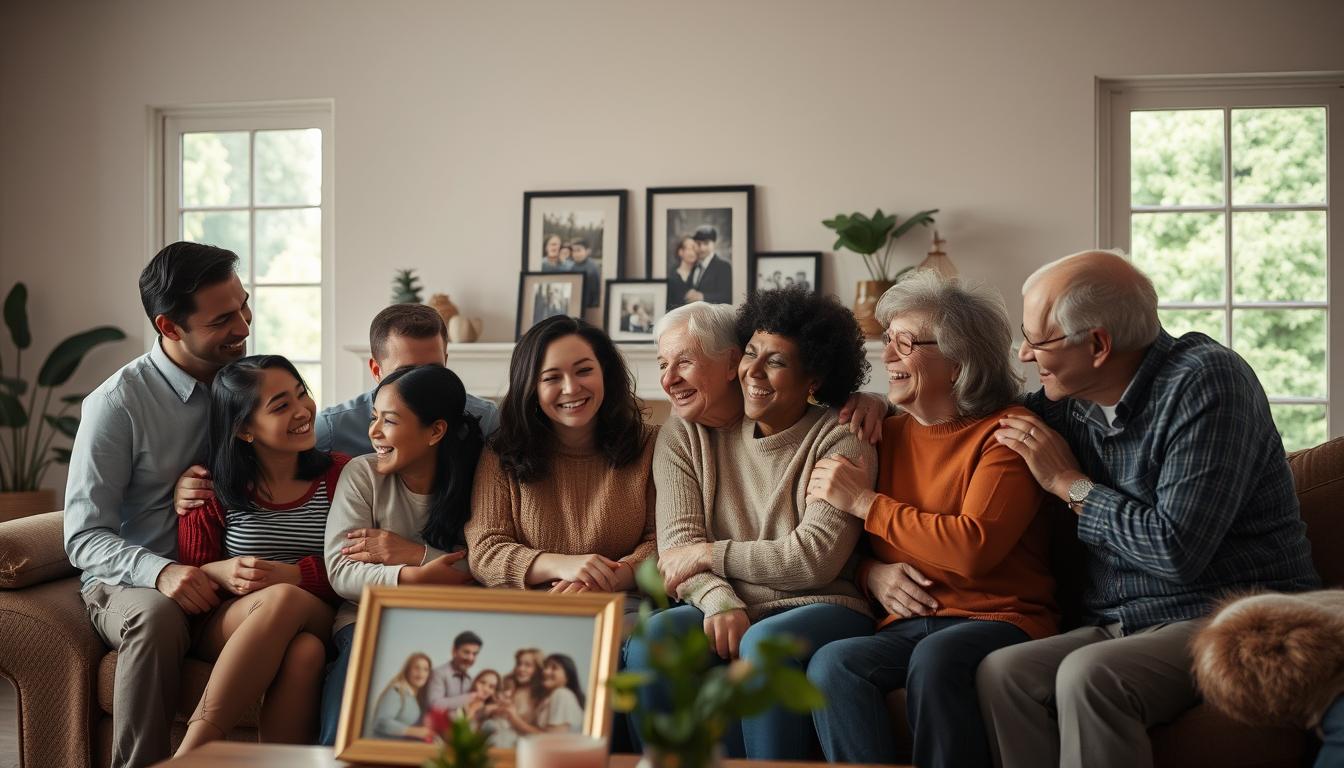
My search for family didn’t start with a birth certificate. Instead, it was in a Filipino community. There, traditions and stories became my heritage. Adoptededs often look for roots, but I found family in shared meals and cultural rituals.
This non-traditional family showed me that found family grows where love is. They proved that belonging beyond blood is at the heart of kinship.
Now, over half of us consider friends, mentors, or chosen communities as family. TJ Klune’s novels, like The House in the Cerulean Sea, show this truth. Family can emerge in orphanages, book clubs, or even with strangers who become soulmates.
These unexpected family connections remind us that love, not blood, creates the strongest bonds. Let’s see how anyone can find home in the most unexpected places.
Understanding the Concept of Family Beyond Blood
For centuries, the family concept was all about blood ties. Now, it includes relationships based on choice and connection. The family definition has grown to include chosen family, showing the variety of family structures around the world.
In the Philippines, blood ties are strong, but many also form bonds outside of them. Indigenous communities in Canada, despite past challenges, keep their kinship systems alive. These systems go beyond genetics.
Stories show how non-biological family thrives. Long-term friendships, foster care connections, and support during tough times are examples. Research shows 40% of people in grief find comfort in shared experiences, not just blood ties.
These evolving family structures don’t replace old bonds; they add to them. People everywhere are redefining what it means to belong. It’s about recognizing that love and commitment, not genetics, define true family.
Personal Stories of Finding Family
Family stories often start where others stop. One person adopted at 4 months old waited 41 years to find their birth family. They found adoption papers in 2008 but faced a 3-month denial from Taipei’s Registration Office. This led to a year of silence.
But they didn’t give up. They eventually found 2 sisters and 1 brother, reuniting after 45 years in just 10 days. This shows how determination can overcome long distances.

Larecia Buford’s DNA test showed her birth father was not related. This led her to change her surname. Her 21-day search with a “search angel” changed her family story.
Jordyn Myers’ DNA test revealed 50% Afghan heritage. This shows how found family stories can surprise us. Such discoveries redefine what it means to belong.
Curtis Green and his sister were separated at birth but found each other on Facebook after 35 years. They lived just 10 miles apart. Karen Riley’s father found his children through DNA at 80, showing connections can form at any age.
Alice Collins Plebuch spent 2.5 years confirming her Jewish heritage through DNA tests. These stories show family is more than just blood. It’s about courage, patience, and openness to new connections.
Benefits of Non-Blood Relationships
Chosen family benefits show the strength of intentional bonds. Unlike blood ties, these relationships are built on trust and shared values. They offer emotional support without the baggage of inherited conflicts.
These connections are about real interactions, not just obligation. They help us grow stronger together.
Studies show that these relationships are good for our minds. People in healthy relationships sleep better and have lower heart disease risks. Chosen family members often seek therapy or join groups to heal from past traumas.
Being in supportive relationships boosts our mood and immune system. This is because our bodies release more oxytocin and serotonin, which are happiness hormones.
These relationships also help us grow personally. They introduce us to new ideas and help us overcome past hurts. The U.S. Surgeon General’s 2000 Family Health Initiative highlights the importance of family in health. Now, self-chosen groups play this role.
These bonds change how we see family. By choosing who to trust, we build connections that support our emotional health. Chosen family benefits create a strong support system for life.
How to Recognize Family in Unexpected Places
Recognizing family starts with noticing small, consistent acts of care. Signs of genuine relationships show up in tough moments. Like friends who stay late to help after a loss or coworkers who remember your fears. These patterns show deeper bonds waiting to be acknowledged.
Building trust often happens in shared struggles. Military members say camaraderie is stronger than blood ties. When teams face danger together, they form unspoken loyalty. This trust mirrors family dynamics, showing bonds can thrive outside traditional setups.
Workplaces can also become unexpected families. Over 40% of employees feel like family with coworkers. Colleagues who listen without judgment or celebrate promotions as personal victories become chosen family. These are meaningful connections that time and challenges reveal.
“Family isn’t a title—it’s the people who choose you when others walk away.”
Look for moments where vulnerability feels safe. When someone laughs at your oldest joke or stays calm during your panic attacks, that’s family material. These ties don’t need a DNA test—they’re built through presence and patience. Pay attention to who shows up, not who’s on a family tree.
Creating a Sense of Belonging
Building connection in chosen families starts with creating family traditions that feel real. Whether it’s a weekly movie night or a holiday ritual, chosen family rituals help shape identity and shared history. Research shows active listening and daily check-ins—like asking kids about their highs and lows—strengthen bonds. Even small acts, like surprising a child with a noted interest, reinforce that they’re seen and valued.
“All the believers were together and had everything in common.” (Acts 2:44-47)
Clear family boundaries also matter. Like the early church’s communal care, intentional rules create safety. The equation Safe + Belong = Thrive reminds us stability comes from both security and connection. Even mobile families—like those moving frequently—can anchor relationships through consistent routines. Traditions don’t need to be elaborate; a simple game night or grocery shopping together builds familiarity.
Children’s rights to form friendships (Article 15 of the UNCRC) inspire flexibility in creating family traditions. Letting teens design a family tradition or co-plan meals fosters ownership. Job swaps—like parents doing homework while kids cook—model mutual respect. These small acts turn spaces like kitchens into places where trust grows.
Belonging isn’t inherited; it’s built. Whether through grazing boards for teens or handwritten notes, every gesture reinforces that everyone has a place. Like Ruth’s loyalty to Naomi, commitment to each other transforms casual groups into lasting families.
Finding Family in Hobby Groups
Hobby groups are more than just activities. They are where real bonds are formed. When people come together over shared passions like cooking, gaming, or hiking, trust and friendship grow. These spaces turn casual friends into lifelong connections, showing that family isn’t always about blood ties.
In craft circles or sports teams, members find more than just fun. They create recreational families where support is always there, through life’s ups and downs. A knitter from Ohio said, “My yarn group became my second family after I moved. We celebrate each other’s milestones and offer advice like siblings.”
“Hobby connections mean you’re never alone—someone always gets your jokes or shares your obsession.”

From book clubs to paintball teams, these groups are built on mutual respect. Joining a local league or online forum opens doors to people who get you. Shared passions create a common language, making it easier to be open. A gamer in California found a mentor in her esports team, now a trusted friend.
Building these bonds takes effort. Show up to events, volunteer at group meetups, and be open to deeper talks. Over time, a pottery class might become a support network during tough times. These communities show that family can form anywhere passion leads.
The Role of Digital Platforms in Finding Family
Online communities are now key in forming family bonds. For many, digital relationships are the base of support and belonging. Sites like Reddit and gaming networks connect people globally, creating internet families united by shared interests or challenges.
A 2018 study found nearly half of U.S. teens are online almost all the time. This shows how these spaces are essential for younger generations looking for connection.
Online support groups are lifelines for those with unique interests or health conditions. A breast cancer survivor said, “My online support group became my chosen family—they celebrated with me and mourned with me.”
Virtual connections also help bridge gaps between people. Gamers in Discord servers form bonds as strong as real-life friendships. But, it’s important to set clear boundaries to keep trust and safety.
Data shows older adults are also joining these online spaces. Over 54-year-olds are the fastest-growing group on social media. For example, 50% of Finland’s 55–74-year-olds use platforms every day, building virtual communities across ages.
While there are challenges like misinformation, these digital spaces show family isn’t just about being in the same room. The internet hosts countless stories of people building online communities that feel like home, whether through hobbies or support networks.
Coping with Loneliness and Isolation
Starting to overcome loneliness is about taking small steps. Older adults with social isolation often face mobility or health issues. But, there are ways to connect. Joining groups for hobbies like gardening or book clubs can help find common interests.
Even simple actions, like volunteering with the American Red Cross®, can give a sense of purpose. They help in building relationships.
“Connection is why we’re here; it is what gives purpose and meaning to our lives.”
Staying active, like through virtual fitness or nature walks, can reduce stress. Singing alone or in online choirs can lift your mood. Meditation helps ease anxiety. Taking care of sleep, nutrition, and limiting screen time also boosts emotional strength.

When meeting people in person is tough, digital tools can help. Video calls with friends or online support groups can make you feel less alone. Doing kind acts, like writing to isolated neighbors, can spread a sense of belonging.
Remember, finding connection is a journey. Celebrate small victories, like going to one virtual event a week. Be patient with yourself as you navigate this path.
Challenges of Non-Blood Relationships
Creating families beyond blood ties has its own set of challenges. Adopted individuals often face pressure to prove they belong. This is highlighted in Seven Core Issues in Adoption and Permanency, which talks about loss, rejection, and identity struggles.
Even when bonds are strong, chosen family difficulties can pop up. This happens during holidays or crises, where acceptance isn’t always easy.
Legal issues add to the complexity. Over 50% of those in chosen families face conflicts over inheritance or medical decisions without agreements. Without legal documents like healthcare proxies, loved ones might not have visitation rights in emergencies.
Surveys show 70% value these relationships as much as blood ties. Yet, 33% struggle with mismatched expectations about roles.
“Estrangement isn’t failure—it’s a step toward healing.”
Relationship obstacles also show up in everyday life. Half of those surveyed feel more stress when friends act like family. 50% of estrangements are due to unmet role expectations. Yet, 96% of estranged individuals reported positive outcomes like regained independence.
Legal tools like power of attorney can help bridge gaps. Open communication is key to setting boundaries. By embracing these steps, chosen families can turn challenges into strengths, proving they thrive with heart and law.
Celebrating Your Chosen Family
Chosen family celebrations are more than a trend. They are a way to strengthen bonds based on choice, not blood. Celebrating with non-traditional ceremonies or simple dinners can create lasting memories. Giving handmade gifts or writing heartfelt letters shows how much you care.
Start a tradition like a “gratitude jar.” Each week, everyone writes down things they’re thankful for. This can bring your chosen family closer together.

In 2020, 1 in 4 Americans reported family estrangement, making chosen family appreciation a lifeline for many.
Non-traditional ceremonies can be simple yet meaningful. Gather and share stories of how you met. This can deepen your connections.
For those who’ve faced rejection, create a symbolic ritual. Exchange friendship bracelets or plant a tree together. Even adopting a family nickname or recipe can symbolize your shared history.
Family appreciation rituals can vary. LGBTQ+ communities might host “queer prom” events. Others might exchange vows during holidays, blending biological and chosen members. The key is to be consistent. Regular acts of recognition, like birthday cards or volunteering together, build trust over time.
When planning events, make sure everyone feels included. Let everyone contribute ideas for activities or rituals. Celebrate anniversaries of meeting dates or recovery milestones as much as birthdays. By focusing on love, these moments become cherished memories.
The Future of Family Dynamics
Future family structures will change as we accept new family models. We’re seeing more co-parenting and chosen families. These changes show that family can mean many things.
Studies show kids in joint custody often do better than those with one parent. This proves that flexible family setups can be good for kids.
Family policies need to catch up with these changes. In the U.S., married same-sex couples are healthier than unmarried ones. This shows that legal recognition is important.
Today, we value emotional connections more than old traditions. As families grow and change, we need to support them. This includes caring for aging parents and young adults forming their own families.
By focusing on emotional bonds, we can build stronger families. Every family, whether by choice or circumstance, can find support and strength together.