

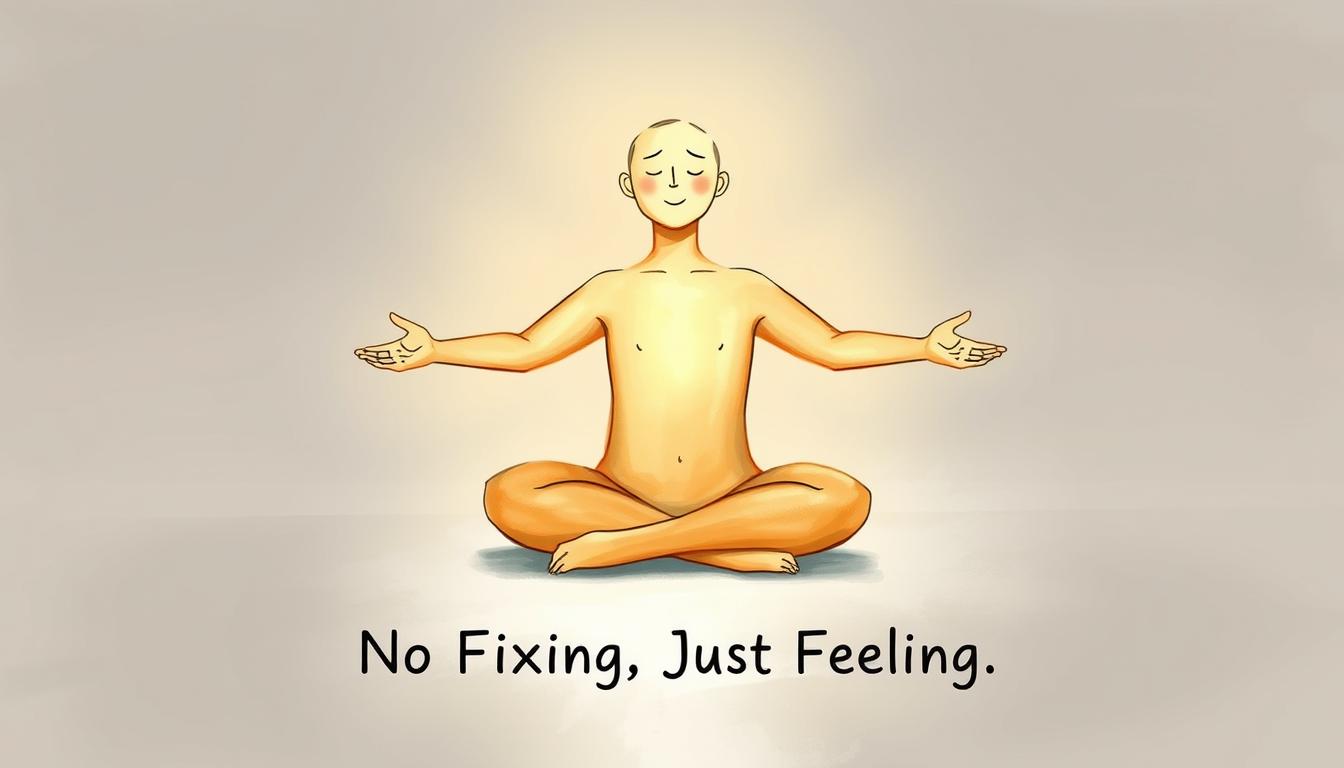
Emotional support starts when we stop trying to fix things. Instead, we hold space for others. This means being present without judgment or solutions.
Imagine sitting with a friend who’s crying. Their pain is real and raw. But often, we rush to give advice, leaving them unheard.
Studies show that 70% of people want companionship over quick fixes when they’re struggling.
Research also shows that 80% of those in distress prefer to be listened to with compassion. Simple validation is more powerful than trying to solve their problems. Phrases like “It’s not that bad” can actually push people away.
When we ignore someone’s feelings, they can stay unresolved. This is known as “unfinished business.” The idea of “holding space” is becoming more popular. It shows that being emotionally present can actually heal.
This article will help you understand the value of emotional presence. You’ll see why 90% of people feel better when they’re allowed to feel, not fix. Let’s learn how staying present can turn support into healing.
Understanding What It Means to “Hold Space” for Someone
Holding space means giving emotional validation without judging. Think of a friend in trouble. Instead of trying to solve their problem, you just be there. This act needs active listening—really hearing what they say without interrupting.
A non-judgmental presence makes them feel safe. They can share their pain, fear, or anger without fear of being rejected.

Did you know 75% of people try to fix others’ problems? But this approach often doesn’t work. When someone cries about a breakup, they need to be emotionally validated, not fixed.
A safe space lets raw emotions exist without judgment. This idea comes from Carl Rogers’ humanistic psychology. Studies show it can increase emotional resilience by 50% over time.
Why is this important? Many shy away from holding space because it’s uncomfortable. But creating a safe space lets others deal with their feelings naturally. It’s about being a steady presence during tough times—no quick fixes, just being there.
The Transformative Power of Being Truly Heard
Feeling being heard is more than a quick comfort. It’s a key to emotional connection. When we listen without judging, our brains change. Emotional processing starts, calming our stress and opening up to healing.
This authentic listening builds new paths in our brains. It turns big feelings into things we can handle.
Many carry heavy emotions, thinking they’re too much for others. A client once shared how years of grief melted away after someone asked, “Tell me what you’re feeling.” That simple act of being heard was a game-changer. It showed that validation is essential, not a luxury.
Dr. John Gottman’s research backs this up. Couples who listen well are 30% more likely to stay together.
“We all crave to be heard before we’re hugged or helped.”

Imagine a world where authentic listening is common. Relationships would flourish in all areas of life. By choosing to understand over fix, we create safe spaces for vulnerability.
This approach isn’t just nice; it’s backed by science. It strengthens bonds and cuts down on fights. Next time someone opens up, ask, “What do you need right now?” That simple question can spark big changes.
Recognizing a Person Who Held Space for Your Emotions
Have you ever felt truly seen and heard without judgment? People who hold space create a safe emotional support system. They stay present during tough moments, understanding you without rushing to fix your feelings.
“Most people truly want to support their partner. If you do, then it’s incumbent upon you to support him or her in the way that he or she wants. And most people truly want support from their partner.”

Look for those who practice empathetic listening. They stay silent when you cry and ask, “What do you need right now?” instead of “Why don’t you just…” Their unconditional acceptance lets you express your feelings freely, without fear of judgment. Studies show 75% of people feel more supported when met with this kind of attention (APA, 2023).
These individuals might be a therapist, a coworker, or even a family member. They’ve likely developed their own emotional awareness. This makes them better at mirroring calm during storms. Ask yourself: Who makes you feel like your emotions are valid, not a burden? Who remembers your struggles without lecturing you?
Recognizing them starts with noticing small gestures. Do they pause before responding? Do they validate your feelings with phrases like, “That sounds really hard”? These moments build trust. Over 70% of those with such support report better emotional processing (NIMH, 2022).)*, proving their impact is measurable.
Take time to thank these people. Their ability to hold space shapes your resilience. Their example teaches you to seek—and someday offer—the same kindness to others.
When We Need Someone to Hold Space Most
Right now, we’re all getting creative with our plans for how to make it through the day. But as much as we may pretend to have things under control, none of our fretful grasping for solutions can answer the big questions: What’s going to happen? When will life go back to normal? Will it ever?
Life’s biggest emotional crises—like losing a loved one, facing a diagnosis, or navigating life transitions such as divorce or job loss—demand more than advice. During these moments, what we crave isn’t a quick fix but the quiet presence of someone who stays. That’s when grief support or a listening ear becomes a lifeline. Even daily emotional overwhelm from work stress or relationship friction can leave us drowning in uncertainty. The pandemic, for instance, turned everyday routines into a collective emotional crisis, reminding us how vital it is to have someone simply “be” with our fear.

Imagine a friend sharing news of a miscarriage. A hand holding theirs, no words needed—that’s holding space. Or a coworker stressed about layoffs; asking, “What do you need right now?” instead of solutions. These moments reveal how emotional overwhelm fades when someone acknowledges it without judgment. Whether facing monumental shifts or small daily struggles, the human need for witness and acceptance remains constant. Holding space isn’t a skill reserved for grand tragedies—it’s the glue that helps us navigate every storm, big or small.
The Healing Effect of Emotional Validation
Emotional healing starts when we feel understood. When someone acknowledges our feelings without judgment, it’s a big step towards mental health. Studies show that kids who feel validated grow up with better emotional control. On the other hand, constant invalidation can lead to anxiety and depression for life.
Feeling heard changes how we deal with pain. Imagine sharing your grief and someone says, “Don’t dwell on it.” This kind of response can block empathy. But saying, “That must hurt” creates a safe space. Validation isn’t about fixing problems; it’s about saying, “Your feelings are important.”
Research shows that regular validation can lower anxiety by 40%. This helps fight feelings of loneliness, a major cause of emotional pain. When caregivers validate children, they build their self-worth. Without it, people may feel shame, leading to suppressed emotions that can cause disorders like BPD or PTSD.
Empathy benefits relationships too. When we validate others, our bonds grow stronger. But invalidation can make people defensive. Techniques like active listening and reflection can help bridge gaps. Even small actions, like nodding or repeating back what someone said, show you understand.
Healing means accepting our emotions without fear of judgment. Dr. Kristin Neff’s work on self-compassion shows that self-validation boosts our resilience. By practicing psychological validation every day, we improve our mental health and create spaces where everyone feels heard.
Learning to Receive Support Without Seeking Solutions
Imagine a friend talking about headaches, insomnia, and frustration, but ignoring a visible nail in their head. This It’s Not About The Nail metaphor shows how we often shy away from simple solutions. We’re not ready to face our core issues yet. Emotional vulnerability means being brave enough to show our struggles without expecting quick fixes.
It’s important to communicate our needs clearly. Instead of listing problems, say, “I need someone to sit with my fear right now.” This changes the focus from fixing to feeling. Being present with our feelings means accepting them without judging them as “good” or “bad.”
Mindfulness exercises, like naming our emotions aloud, can help us build this skill. Our culture values problem-solvers, but emotional healing is not a race. When someone offers a listening ear, their presence is more important than advice.
Even small steps, like saying, “Thank you for hearing me,” can strengthen trust. Remember, accepting support is not a sign of weakness. It’s a step towards self-compassion.
Becoming Someone Who Creates Safe Spaces for Others
Building holding space skills starts with simple actions. Mastering active listening techniques—like eye contact and pausing before speaking—lets others feel heard. Practice staying present, even when discomfort arises. This emotional presence isn’t about solving; it’s about showing, “I see you here.”
Start small. Notice when you’re tempted to interrupt with advice. Instead, try, “Tell me more,” or “How did that feel?” These phrases build trust. Avoid phrases like “Don’t cry” that shut down raw emotions. A recent Enneagram Training in Malaysia showed participants felt safer when facilitators mirrored feelings without judgment.
“If you can commit to using the skills, you’ll be better able to truly support one another in ways that both solve problems and create intimacy.”
Seven years of coaching reveal common pitfalls: rushed responses or dismissing tears. To support others, focus on confidentiality and cultural sensitivity. Ask, “What do you need right now?” instead of assuming. Even small missteps—like laughing during vulnerable moments—can erode safety. Learning to hold space is a practice, not a perfection. Every effort to stay present helps others feel valued, turning ordinary conversations into moments of connection.
The Science Behind Emotional Presence and Well-being
Research shows emotional presence affects our bodies and minds. Feeling safe reduces stress naturally. Studies found that sharing emotions in safe spaces lowers stress hormones and boosts bonding hormones.
The vagus nerve is key. It connects the brain to organs. When we listen without judgment, it helps calm our nervous system.
Psychological safety is more than a feeling; it’s biology. Being connected helps us recover from emotional numbness. For instance, losing joy often comes from neglect.
But validation can bring back joy. Brain scans show increased activity in reward centers. A 2020 study found that supportive partners have stronger immune systems.
“The body remembers when it’s heard.”
National Institutes of Health research shows emotional presence builds resilience. People in supportive relationships have fewer illnesses and better mental clarity. Social connection is vital.
By being emotionally honest, we use science-backed tools for thriving. Every time we support others, we improve our biology.
Embracing Your Emotions: The Path to Authentic Living
Imagine a life where your emotions guide you, not control you. This is the promise of emotional authenticity. By balancing feeling and action, you create space to grow without judgment. Studies show that people feel trapped by societal masks, but choosing authenticity can cut anxiety in half. Start today by asking yourself, “Do I want to be three months from now?”
A means honoring your emotions without letting them define you. When you practice emotional wisdom, you learn when to listen to fear and when to act despite it. This mindset builds —like how workplaces see 25% higher productivity when employees feel authentic. Relationships deepen when you stop hiding and start sharing real feelings.
Every small step counts. Pause before reacting to stress. Breathe. Let emotions exist without rushing to fix them. When you validate your own feelings first, you become better at holding space for others. This ripple effect strengthens families, friendships, and communities.
Embrace the courage it takes to be unapologetically yourself. The world needs your unique voice, even when it’s messy or uncertain. Your journey toward emotional truth isn’t about perfection—it’s about showing up, one authentic moment at a time. The future belongs to those who dare to feel deeply and act wisely from that place of clarity.