

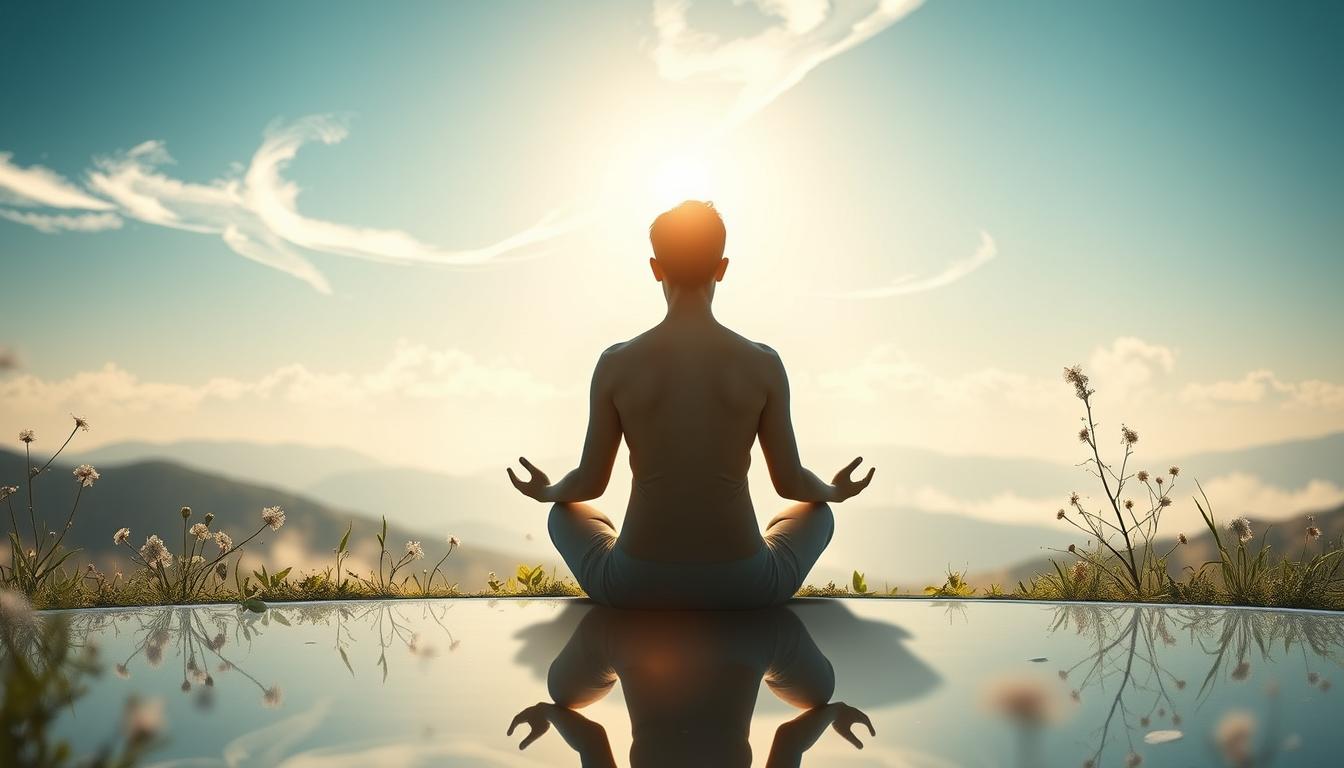
My journey of self-discovery began when I moved 170 miles to a new apartment. Living alone for over a year, the pandemic turned solitude into a teacher. Losing my job meant no daily Zoom calls, forcing me to embrace silence.
Apps like Libby’s audiobooks and Down Dog’s guided meditations became my guides. My self-discovery journey started in the quiet, where noise once filled every moment.
Society fears silence—studies show 70% feel isolated at first, and 60% link quiet to loneliness. Yet my mornings with breakfast podcasts and nights listening to ASMR videos showed solitude’s hidden gifts. This journey taught me silence isn’t empty—it’s where I found clarity.
Every workout with Down Dog or playlist on YouTube Music became a step toward understanding myself. Now I share how choosing solitude transformed my life.
The Unexpected Beauty of Solitude
When we think of being alone, we often see loneliness. But solitude is different. Surgeon General Vivek Murthy says in his book Together that solitude is about connecting with yourself. It’s a time for quiet, leading to clearer thinking and discovering new passions.
“I never found the companion that was so companionable as solitude.” — Henry David Thoreau
Solitude is not just peaceful; it’s powerful. Studies show 80% of artists and writers get their best ideas when alone. This is where personal growth in silence occurs. Creativity and self-awareness grow when distractions disappear.
Even short moments, like a walk or journaling, can bring clarity. Solitude can also make relationships stronger. Over 75% of people who spend time alone say they feel more connected to others afterward. This inner reflection builds empathy and patience, making interactions better.
Research shows 50% of meditators feel less stressed and more focused after weeks of practice. Embracing solitude is about growing, not being lonely. Whether it’s quiet mornings or weekend hikes, small steps can reveal the power of time alone. As Thoreau said, the quiet moments are often the most meaningful. Let the silence teach you what the world can’t.
The Initial Struggles of Being Alone
Starting to live alone can feel like exploring unknown seas. Many people face unexpected anxiety in the first days. The silence, once unfamiliar, now seems overwhelming to 54% of adults.
The quiet of a kitchen or eating alone can make you restless. One person felt the pressure of every passing minute after ending a 4-year relationship. They found even a quiet day without screens felt long.

61% of women shy away from solo activities like eating out alone. But, these moments of solitude reveal deeper truths. For some, it’s a chance to shed emotional weight, like a 20-pound loss.
A woman felt lost, crying hard, after separating from her partner. She found solace in reading for an hour or walking for 30 minutes. Studies show 80% who journal or meditate feel less lonely.
These early challenges are not failures but part of the journey. Small steps, like joining a club or reconnecting with a friend, can help. Recognizing loneliness is the first step to overcoming it. As psychologist Robert S. Weiss said, emotional loneliness comes from unmet needs for connection, not just company.
Every tearful morning or quiet night is a step toward understanding. It’s a foundation for the self-discovery that awaits in the quiet.
Self-Discovery Through Reflection
Alone time isn’t just empty space—it’s a canvas for the self-discovery journey. When distractions fade, reflection becomes a mirror, revealing truths buried under daily noise. Imagine journaling under a quiet sky or tracing thoughts during a walk: these moments let you confront values, dreams, and fears unfiltered.
“We’re addicted to approval, but true growth starts when we stop seeking validation.”
Studies show 90% of silent retreat participants experience personal transformation. Reflection strips away societal masks, exposing patterns in relationships, career choices, or emotional habits. A contemplative practice like meditation or doodling ideas can surface insights that busy lives often ignore.
Caroline McHugh’s TED Talk on approval addiction highlights how societal pressure stifles self-awareness. By stepping back, you reclaim agency. For example, 85% who embrace solitude report heightened empathy—a shift from self-focused noise to understanding others and oneself.
Solo travelers often discover this deeply. Unplugged, they notice how nature or new environments spark creativity. Even 55% find solace in natural spaces, proving that quietness fuels clarity. The path isn’t linear—personal transformation unfolds gradually, reshaping choices and priorities with every reflective moment.
The Power of Silence
Silence isn’t empty—it’s a space where clarity blooms. Many cultures rush to fill quiet moments with noise. But mindfulness in solitude shows how silence sharpens focus. Studies reveal that even short pauses can improve decision-making.
Imagine starting your day without screens, just breath and thought. That’s where finding inner peace starts.

Pico Iyer’s TED Talk, seen by 11 million, talks about solitude and creativity. At California’s Benedictine hermitage, monks practice silence every day. This shows its timeless value.
Even a short time alone can recharge introverts. The Wise Habits 6-week program teaches turning quiet moments into daily rituals. It’s open until January 25th.
Science says silence helps healing. Bodies repair better in quiet, and mindfulness boosts productivity. Try short meditations before bed or when you wake up. They open the door to intuition.
Silence isn’t isolation; it’s a tool to listen deeply. The next time quiet feels awkward, remember: it’s where wisdom whispers loudest.
Building Emotional Resilience
Walking became my classroom. Each step taught me to sit with discomfort instead of fleeing it. The emotional resilience building process started small. I noticed tears without judgment, named fears aloud, and kept moving forward.
When anxiety rose, I learned to pause, breathe, and ask, *What’s the next tiny action I can take?* This mindset shifted overwhelm into manageable steps.
Research shows resilient people don’t avoid storms—they build shelters. I adopted practices like 10-minute mindful walks and journaling after tough days. I also set small goals.
Even 30 minutes of daily movement, like a brisk walk or yoga, boosted my stress handling. Writing down three daily gratitudes rewired my brain to spot opportunities in challenges. Over time, what once felt like drowning became navigable waters.
These tools aren’t just for solitude—they prepare us for life’s chaos. When colleagues faced classroom crises, I noticed my reactions stayed calmer. The overcoming loneliness work translated into clearer communication and less reactivity.
Resilience isn’t about never falling; it’s learning to stand back up with better strategies. Every step forward, even shaky ones, strengthens the muscles needed to thrive—not just survive—in both quiet and crowded spaces.
Cultivating New Hobbies
Alone time is a chance to be creative. Try painting, hiking, or baking to explore your passions. Start with something simple, like frozen pizza, and see how far you can go. Self-discovery journey starts with small steps, like a 5-minute meditation or a weekend hike.

Consider journaling, gardening, or learning guitar chords online. YouTube can teach you DIY skills. Keep a gratitude journal to see how your hobbies boost your confidence.
Choose activities that make you happy, not just follow trends. A short walk can turn into marathon training. The aim is to enjoy the journey, not to be perfect.
Every hobby is a step towards growth. Whether it’s crafting, coding, or birdwatching, exploring solo reveals your strengths. Consistency is key—small steps every day add up. Embrace the journey and choose activities that feel true to you.
The Importance of Self-Care
Self-care thrives when you’re alone. You can create routines that really meet your needs. This might include journaling, meditating, or just relaxing. Research shows even 20 minutes of alone time can improve focus and lower stress.
Think of Bill Gates, who takes a yearly “think week” to recharge. This shows how important solitude is for mental health. Teens who took a break from screens for five days felt more emotionally aware. This proves solitude helps us grow.
But many feel uneasy about being alone. They might feel overwhelmed by too much to do or digital distractions. Yet, taking quiet time is essential.
Like CEOs who set aside time for solo brainstorming, we can build our resilience. When we pause, we listen to our bodies. We might need water, rest, or to create. This mindful approach to self-care makes us better at connecting with others.
Small acts of solitude each day can greatly improve our well-being. It’s not selfish; it’s necessary.
Social Connections in Solitude
Surrounded by the café’s warmth, I realized solitude wasn’t isolation—it was a bridge to deeper understanding of others.
Connecting with yourself isn’t about avoiding others. It’s about choosing interactions that matter. Being alone for the first time changed how I see relationships. I stopped wanting to be in crowded places just to feel seen.
Instead, I learned to listen—to my own needs and others’. Research shows people with strong social ties are 50% more likely to survive stressors, per a 2010 study. But quality is more important than quantity.
My high school years of forced solitude felt lonely. But later, choosing to be alone—like running with a Sony Walkman—built my resilience.
Introverts and extroverts need balance. A 2021 study found acts of kindness cut loneliness. My coffee shop moment showed me that solitude lets me enjoy small talk without pressure.
Now, I join groups not out of obligation but curiosity. The golden ratio is personal. Some love crowds; others quiet cafes. The key is knowing your rhythm.
When you’re at peace with yourself, every connection feels intentional—not a chore.
The Impact of Technology
Technology often takes over our alone time, turning it into screen time. A study found 87% of teens use devices when they’re alone. And 41% just binge-watch shows.
This habit creates a paradox. People feel less lonely when doing hobbies but more isolated on screens. Sherry Turkle’s research shows texting can replace real conversations, leaving people wanting true connections.
“I want to learn how to have a conversation,” admitted an 18-year-old in Turkle’s interviews. His words echo a generational shift where face-to-face skills erode.
Her “Goldilocks effect” theory explains why people seek connections that are just right. Technology can’t always provide this balance. Devices can make us anxious, even when we’re alone for just a bit.
But, digital detox can break this cycle. Taking a break from tech lets our minds wander freely. Apps like meditation tools or nature guides can make alone time better, not worse.
Studies show people who practice mindful solitude feel less lonely and more content. Setting tech-free times, like evenings, helps us find peace in solitude. True connection happens when we put down our screens and let our thoughts flow.
Lessons in Independence
Learning to be independent isn’t just about living alone. It’s about gaining the confidence to make your own choices. Many learn this through quiet moments, where personal growth in silence teaches valuable lessons. For example, students who cook meals or manage their money learn important skills and build emotional strength.
A 2019 Cigna survey found that 60% of working Americans feel lonely. This shows how often we look for approval from others. But solitude teaches us to rely on ourselves instead.

University studies show that 85% of students believe living alone is key to growing personally. Over 50% say they feel more confident in their decisions. And 80% value the ability to say “no.”
These lessons aren’t just about schoolwork. They help us face life’s challenges. Doing things alone, like cooking or budgeting, or making career choices without pressure, teaches learning independence that lasts.
Studies also show that feeling grateful and helping others can fight loneliness. This matches the 75% of students who find peace in routines. Being independent isn’t about being alone; it’s about building stronger relationships. Those who learn to be alone well learn to value quality over quantity in their connections.
These lessons stay with us as we get older. Emotional strength grows, and 90% of students keep learning skills like budgeting long after they graduate.
Embracing Change and Growth
At 42, I’ve seen how solitude changed my life. Mornings used to fill me with anxiety, but now they make me curious. Being a mom for 20 years taught me discipline.
But taking time for myself, like getting my hair dyed every week, was a small act of renewal. Each choice, no matter how small, helped me grow.
Research by University of Chicago economist Steven Levitt shows that following a coin toss can lead to happiness. This is my story—embracing change, even when it’s scary, brought clarity. Letting go of “what ifs” made room for growth.
Accepting I’d have only one biological child opened up new passions. This showed me that limits can lead to reinvention.
Change isn’t done alone. Talking to friends or a therapist turned challenges into opportunities. Journaling helped me track my progress, like changing routines or focusing on myself.
Celebrating small victories, like regular meditation or starting a new hobby, kept me moving forward. It’s okay to be scared of the unknown, but taking small steps can lead to big changes.
My journey is ongoing. Growth is a journey, not a final goal. By focusing on self-care and facing my fears, I’ve learned that change is about becoming who I want to be. Every day is a chance to grow, one step at a time.
Moving Forward with Confidence
Personal transformation starts with quiet moments. These moments teach us valuable lessons that build confidence. Whether it’s a morning walk or a quiet evening with a book, they shape our self-view.
Studies show that solitude boosts well-being by over 50%. It helps us set clear boundaries. This clarity gives us the strength to face life’s challenges.
Small steps are important. Try journaling daily or taking an hour off from screens. These habits help us understand ourselves better. By valuing alone time, we grow and become braver.
Remember, solitude isn’t about escaping. It’s about finding what truly matters. By listening to our needs, we build stronger connections with others and ourselves. Research shows that valuing alone time leads to more fulfilling relationships and careers.
Use what you’ve learned to guide you. Even on busy days, find moments for quiet reflection. Each step towards self-trust brings you closer to clarity and resilience. The path ahead is yours to shape. Walk it with confidence, knowing growth starts where comfort ends.