

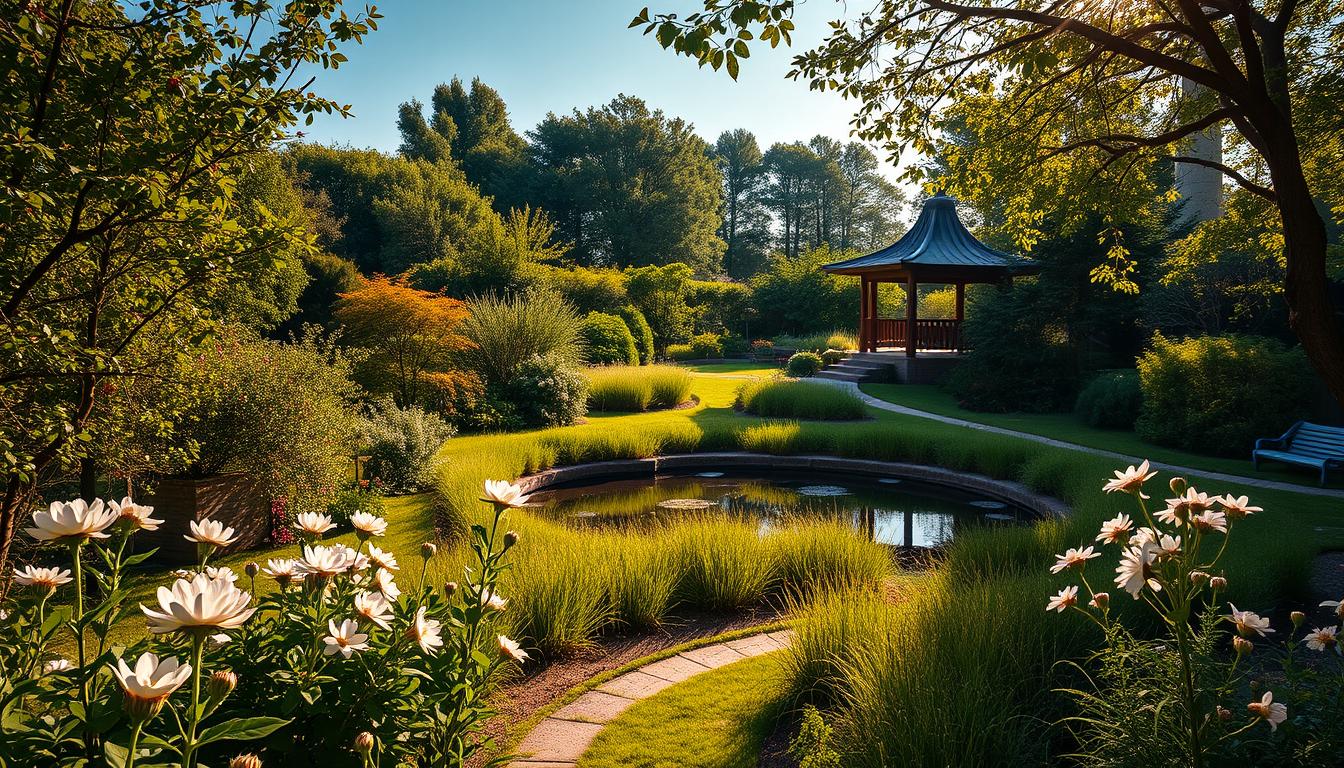
A healing environment is more than a place; it’s a feeling. In our noisy world, places like Oklahoma’s Osage Forest of Peace show us the power of nature and design. These spaces, whether at home or in retreats, offer us a chance to pause and breathe.
They help us find balance and strength to tackle life’s challenges. It’s where we can slow down and feel at peace.
Imagine a spot where your shoulders relax and your heart beats slower. That’s what a healing place does. From forests to quiet rooms, these spaces teach us peace begins with where we choose to rest.
They’re not just locations; they’re lifelines to our well-being.
The Importance of Finding Peaceful Spaces
Modern life can feel overwhelming. But finding quiet spaces can change how we feel. Studies show that peaceful places lower stress hormones like cortisol. This supports our mental wellbeing and helps us sleep better.
A study with 17 patients at WVUH and HCH hospitals found that room design matters. Rooms with bigger windows, like those at WVH, helped patients relax more than smaller ones. Even small changes, like less noise or more plants, can reduce stress.
Healthcare experts say healing environments are more than trends. The Samueli Institute’s Optimal Healing Environment (OHE) framework shows how natural light, calming colors, and quiet spaces help recovery. At Cape Coral Hospital, using OHE principles boosted staff engagement by 4 points. These spaces benefit everyone, not just patients.
“Noise abatement interventions positively affect patients’ perceived quality of care.”
Imagine a garden or a quiet room with soft lighting. These places encourage mindfulness and help our minds reset. Even in busy hospitals, features like soundproof walls or views of greenery make a difference.
Healing environments focus on safety and comfort. They help us find mental clarity and emotional balance. Everyone deserves places where they can breathe, reflect, and rebuild strength.
Characteristics of a Healing Place
Natural light, the soft sound of plants, and the gentle flow of water help create spaces for well-being. Healing design focuses on nature elements like indoor gardens and water features. Studies show they reduce stress and boost mood.
Experiences like the smell of essential oils and the feel of natural materials calm our minds. They help us move from tension to peace.
An effective calming atmosphere balances privacy and connection. Open layouts with green views ground us. Soft lighting and quiet spots invite rest.
Hospitals using healing design see fewer complaints and faster recovery. For example, private rooms with big windows lower anxiety. Noise-reducing walls also reduce stress.

Research shows small details are key. Plants in waiting areas, landscape art, and quiet carpets all help. Even the room layout, like separating sleep and bathroom areas, makes a space feel like home.
These elements together create spaces where healing feels natural and intuitive.
Popular Healing Destinations in the U.S.
Nature therapy spots across America offer escapes for the mind and soul. Places like Sedona’s energy vortexes and Hawaii’s volcanic landscapes are key healing retreats USA. They provide spaces to recharge. Visitors go to American healing places like the Big Island’s volcanoes or Crater Lake’s sacred waters.
These spots mix ancient traditions with modern wellness. The Osage Forest of Peace in Oklahoma invites guests to meditate on serene trails. Taos, New Mexico, offers eco-friendly earthships and spiritual retreats. Santa Fe, known as the “spiritual capital,” has over 497 retreats.
Retreats in Santa Fe range from $250 to $3,000+, with yoga, reiki, and silent meditation. Destinations like Wilmette’s Bahá’í House of Worship or Saint Augustine’s historic sites blend history with tranquility. Whether seeking solitude in the Rockies or community at Asheville’s yoga retreats, these wellness destinations cater to diverse needs.
With 1,624 reviews and a 4.8 trust score, these locations prove healing is within reach for everyone.
How Nature Influences Our Mood
Nature therapy is more than just a nice idea. It’s supported by science. A study of 20,000 people found that spending 120 minutes a week in green spaces boosts well-being.
Forest bathing, a Japanese practice, shows how forests can boost immune cells. This supports biophilia, our natural connection to nature. Even a short walk in a park can lower stress hormones.

Blue mind explains why water views calm us. Mountains give us perspective, and deserts inspire calm. Urban areas with green spaces have lower crime rates and stronger communities, U.S. research shows.
Forest schools in the U.S. have grown 500% in the last decade. This shows a growing interest in outdoor learning. Yet, the U.S. is behind Japan and Europe in using nature in healthcare.
Studies show nature’s benefits are real. Blood pressure drops 5 points after visiting forests, and stress hormones stay low for a week. Even hospital patients with garden views heal faster.
Nature’s benefits are for everyone, everywhere. With more cities, parks are key to public health. Your local park, a walk by the river, or a hike all help. Let nature’s quiet magic work for you.
Practices for Creating Your Own Healing Space
Turn your home into a home sanctuary with careful design. Choose calming colors like soft blues or greens to reduce stress. Plants or water features bring nature inside, and sheer curtains let in more light.
Sacred space creation starts with decluttering. Clear surfaces and organized storage help clear your mind. Even small rooms can be healing with the right setup.
“80% of healing happens in environments that nurture both body and spirit,” says Dr. Wayne Jonas, highlighting the importance of calming home environment design in recovery.
Add rituals like lighting candles or burning sage to clean the space. Make a meditation area with comfy seating and soft fabrics. Essential oils like lavender can also help you relax.
A 2023 study showed 75% of people felt more peaceful with personalized altars or symbolic items. Keep it quiet with sound machines or soft music.
Bedrooms are key. Use blackout curtains and cozy bedding for better sleep. A simple, soothing decor can ground 50% of those recovering. Renters can use removable wall decals or portable plants. Every small change in healing room design can improve your well-being.
Wellness Retreats Across the United States
The U.S. is home to many healing vacations, from peaceful retreat centers to fancy health resorts. Places like the Osage Forest of Peace in Oklahoma offer quiet spots for thinking. Kripalu Center for Yoga and Health, started in 1983, mixes old traditions with new wellness ideas.
The Art of Living Retreat Center, on 380 acres, focuses on meditation. It’s perfect for those looking for spiritual retreats.

Miraval Arizona, part of Hyatt, offers hiking, nutrition advice, and spa treatments. The Ranch Malibu has seven-day programs with group hikes and strength training. YO1 Health Resort uses Ayurvedic therapies like Abhyanga massage.
Sensei Lanai’s Optimal Wellbeing Program lasts five nights, with daily fitness and mindfulness. Choosing the right wellness getaway depends on what you want to achieve.
Health resorts like Canyon Ranch in Arizona and Massachusetts have fitness classes and spa services. The Lodge at Woodloch has over 35 daily activities. The global wellness tourism market is growing fast, showing more people want these experiences.
Retreats like Stanly Ranch’s 135 nature-inspired rooms or the Pocono Mountains Lodge’s 500-acre woodland setting meet different needs. Whether you want quiet or social time, there’s a place for you.
Retreats offer everything from silent meditation to family-friendly health resorts. They focus on healing the whole person. Planning well by researching schedules, food options, and location helps you find the right fit for your wellness goals.
The Role of Community in Healing Spaces
Communal healing grows when people come together in healing communities. Here, shared experiences build resilience. A supportive environment can turn personal struggles into growth for all. For example, in Honolulu’s Kalihi Valley, the KVIBE program brings young men together to fix bikes.
This hands-on group wellness method tackles trauma quietly through teamwork.
Research by Schultz et al. (2016) shows that community bonds fight off loneliness. In San Diego’s City Heights, East African communities overcame mental health issues through shared stories. Veterans at Kankakee Community College found comfort in centers made by their peers.
“Shared healing isn’t just kind—it’s essential.”
Starting to join a healing community is easy. Look for local groups with shared goals, like trauma-informed yoga or online forums for parents dealing with loss. Choose places where you feel safe being vulnerable, not judged. Even short-term groups, like weekend retreats, can create lasting bonds.
Remember, communal healing is about strengthening together, not erasing individual paths.
Spiritual Aspects of Healing Locations
Many sacred spaces across the U.S. have deep spiritual meaning. These include ancient holy sites and modern energy centers. Places like Sedona’s famous vortexes are believed to channel unique energy patterns. 
Sedona’s red rock formations are famous for their spiritual significance. Its vortexes attract those seeking spiritual healing. Recent theories suggest these energy flows connect to other dimensions, like String Theory proposes.
Visitors to Sedona often report feeling clearer and emotionally balanced. Studies show that being in these energy environments can improve well-being by 20-50%.
Spiritual healing isn’t just for natural sites. Places like Scottish medieval shrines or modern meditation gardens also offer a chance to connect with oneself. Even urban spaces can become sacred with simple acts like lighting a candle or saying a prayer.
Creating personal energy centers is possible anywhere. Practices like guided imagery or gratitude rituals can transform any space. Science backs this up: mindful touch can reduce pain by 25%, and affirmations can boost self-esteem by 20-30%.
Whether at a holy site or a home altar, the goal is to foster a sense of purpose and connection. Science shows that this can lead to lasting healing.
The Science Behind Healing Environments
Environmental psychology reveals how our surroundings affect our health. Hospitals that use evidence-based design see patients recover faster. For example, the Cleveland Clinic’s new Neurological Institute, opening in 2021, is designed to reduce stress.
It features natural light, green walls, and art scenes that lower anxiety.
“Spaces that connect to nature can heal,” says a 2005 study. It found patients in bright rooms needed 22% less pain medication. Another study showed hospital art with landscapes cuts stress by 18%.
Therapeutic landscapes blend science and nature. At UVA Children’s Hospital, playrooms with forest themes and outdoor gardens help kids heal faster. Studies show plants lower blood pressure, and natural light improves sleep.
The Samueli Institute’s Optimal Healing Environment framework supports these findings. It links open layouts and calming colors to better health outcomes.
Architectural innovations like sound-absorbing walls and circadian lighting systems are now common. These designs are backed by decades of research. A 2021 review of 600+ studies confirmed that well-designed spaces reduce staff burnout and patient complications.
Even small changes, like adding window views or artwork, make a big difference.
Creating Long-Term Healing Practices
Starting small is key to lasting healing routines. Spend 10 minutes each morning in a sunny spot with a cup of tea. This simple act boosts your mood and sets a wellness tone for the day.
Weekly planning is important. Set aside 30 minutes each day for activities like breathwork or journaling. Use weekends to explore trails or add plants like peace lilies to your home. They purify the air and make your space feel like a sanctuary.
Seasons change, and so should your routines. In winter, use cozy textiles and warm lights to mimic sunlight. Summer calls for dawn walks or sunset meditation. Let your healing space change with the seasons.
Having a supportive community helps keep these habits going. Join groups like Powerhouse Women to share tips and stay on track. Their approach helps make these rituals a part of your lifestyle.
Don’t worry about being perfect. A tidy space and mindful routines create wellness that grows over time. Small steps today lay the groundwork for a lifetime of healing.
Conclusion: Embracing a Healing Mindset
Your wellness journey is all about curiosity and care. It’s about noticing how places like gardens or quiet rooms make you feel better. Even small changes, like adding plants or meditating daily, help you grow stronger. With 1 in 5 U.S. adults facing mental health issues (NAMI, 2023), every mindful choice is important.
Starting to care for your environment begins at home. The World Health Organization says depression will be the top disability by 2030. You can fight this by supporting parks or biophilic design in schools. Small actions, like joining a community garden, can make a big difference. Over 69% of Americans say facing challenges helped them grow (Pew Research Center).
Healing is not something you do alone. Mindful living means checking in with yourself every day. Share your successes: host a workshop, advocate for trauma-informed policies, or just listen to a friend. By taking care of yourself, you inspire others. Together, we can create communities where healing is a shared goal.
Your next step could be a walk in nature, a call to a therapist, or speaking out for change. Every action you take helps plant seeds for a healthier world.